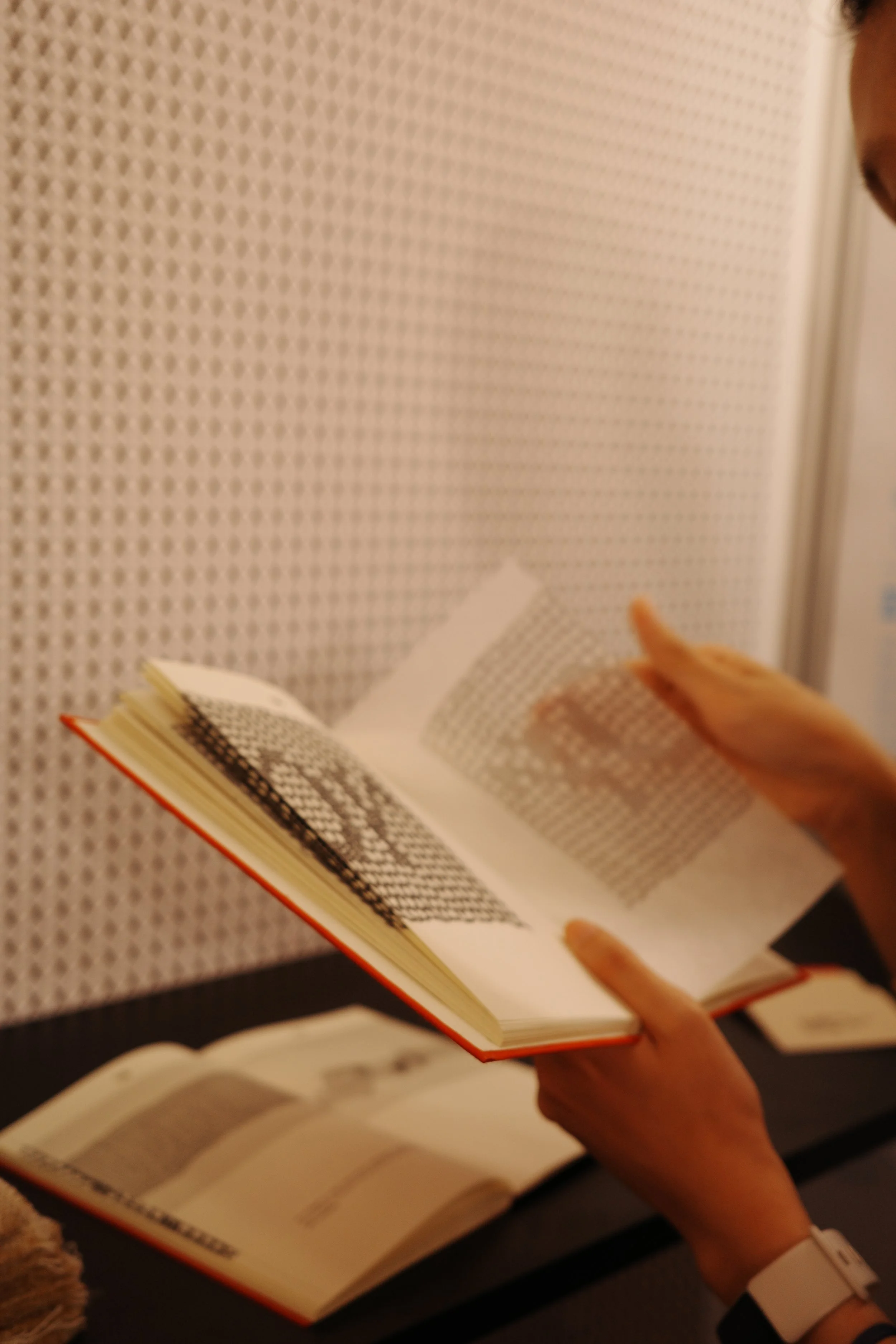
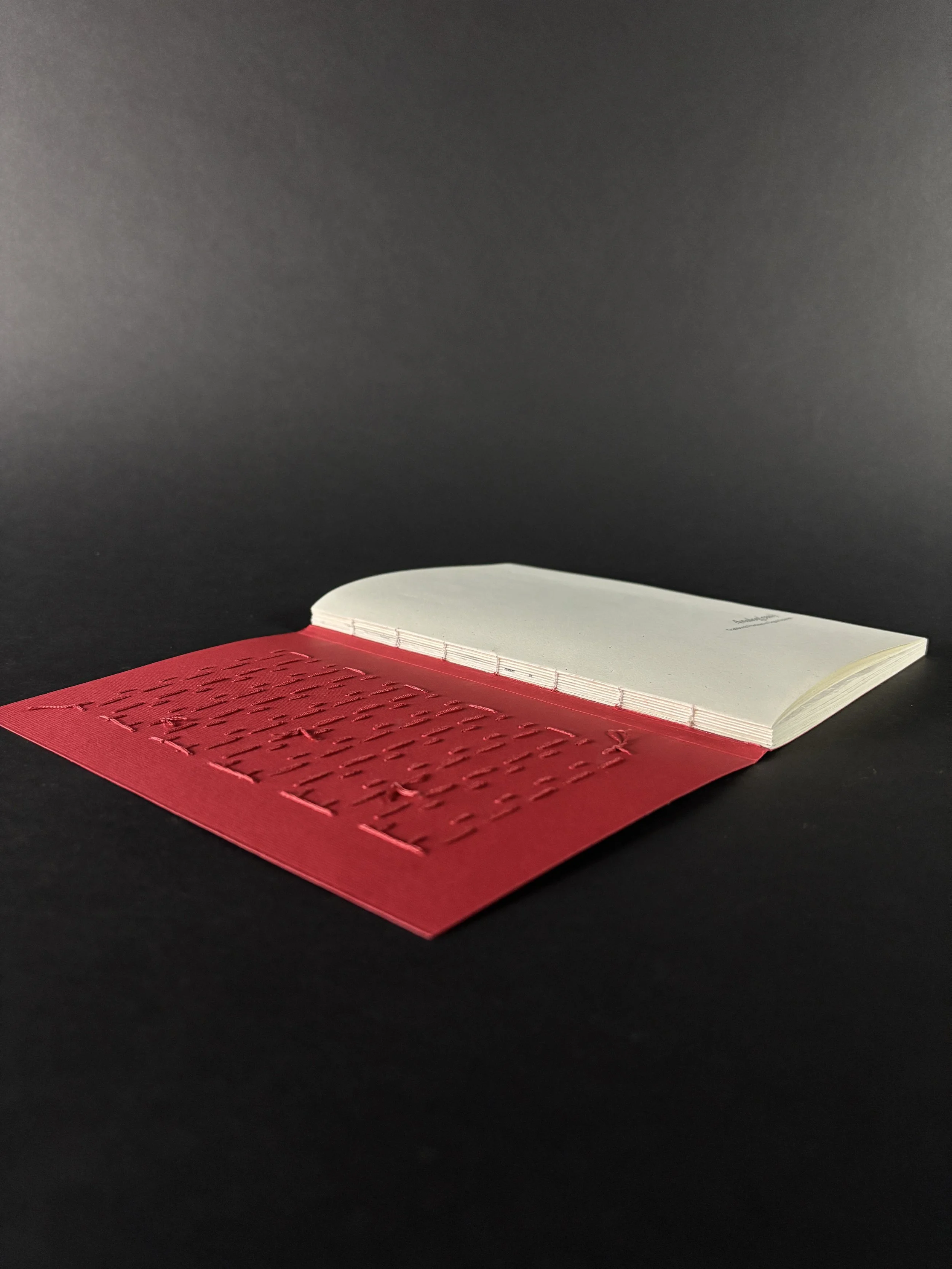
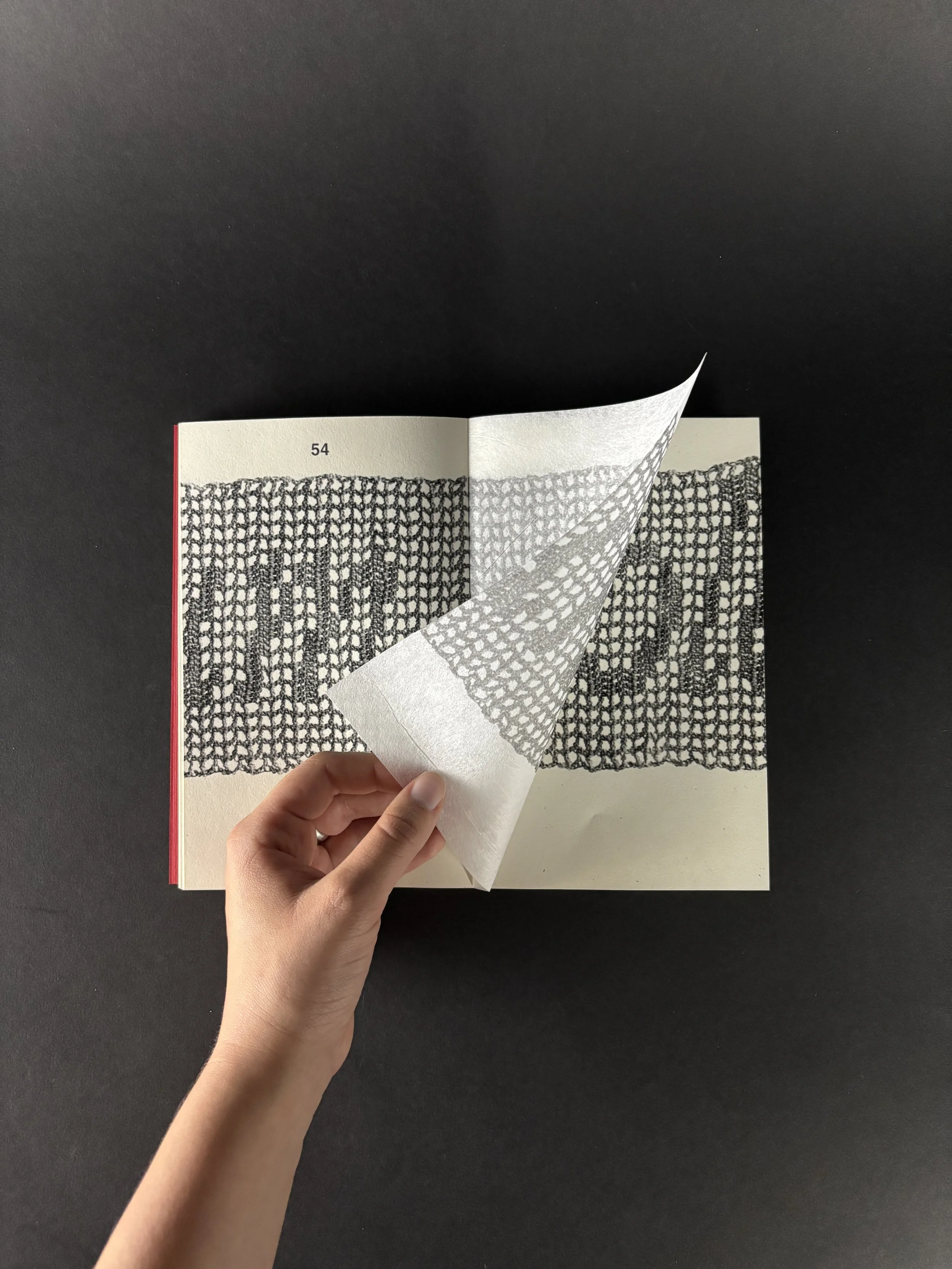
This project was carried out over the course of my second year in a Communications Design graduate program. After honing in on a topic, researching extensively, and carrying out multiple tests, I reached the portion of the thesis where I designed a physical book. Below, I will outline the Design and Production portions of this project.

Design
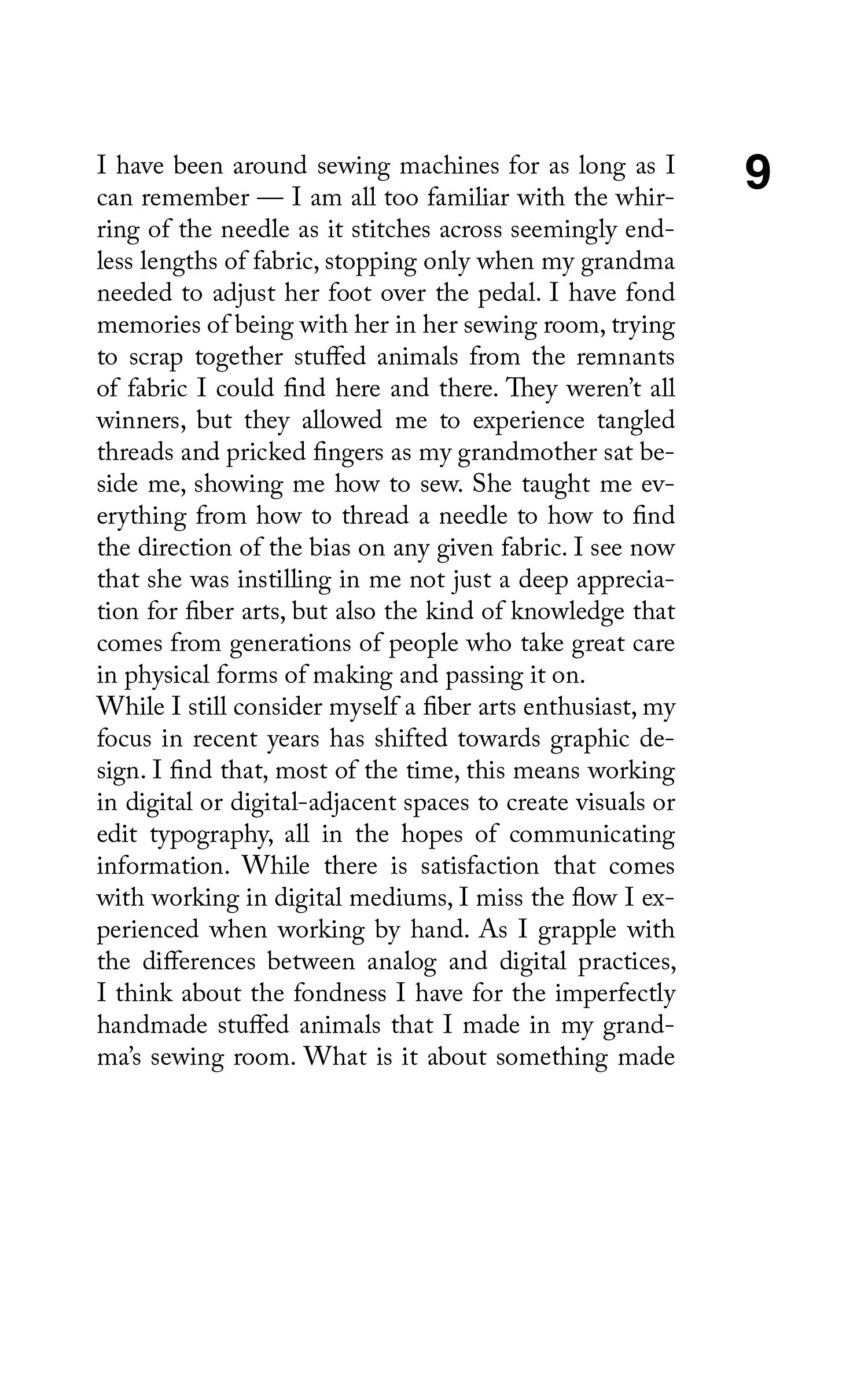
This book was one of my first major undertakings using Adobe InDesign. In order to decide on the size and ratio of the page, I looked to examples of books I liked and produced several blank “dummies” of varying dimensions and page count to get a sense of how the book would feel when being held. Since the topic of the book had to do with materiality and craftsmanship, I wanted to consider this at every point of the design process. I landed on a smaller, more vertical layout and that formed the basis for my grid.
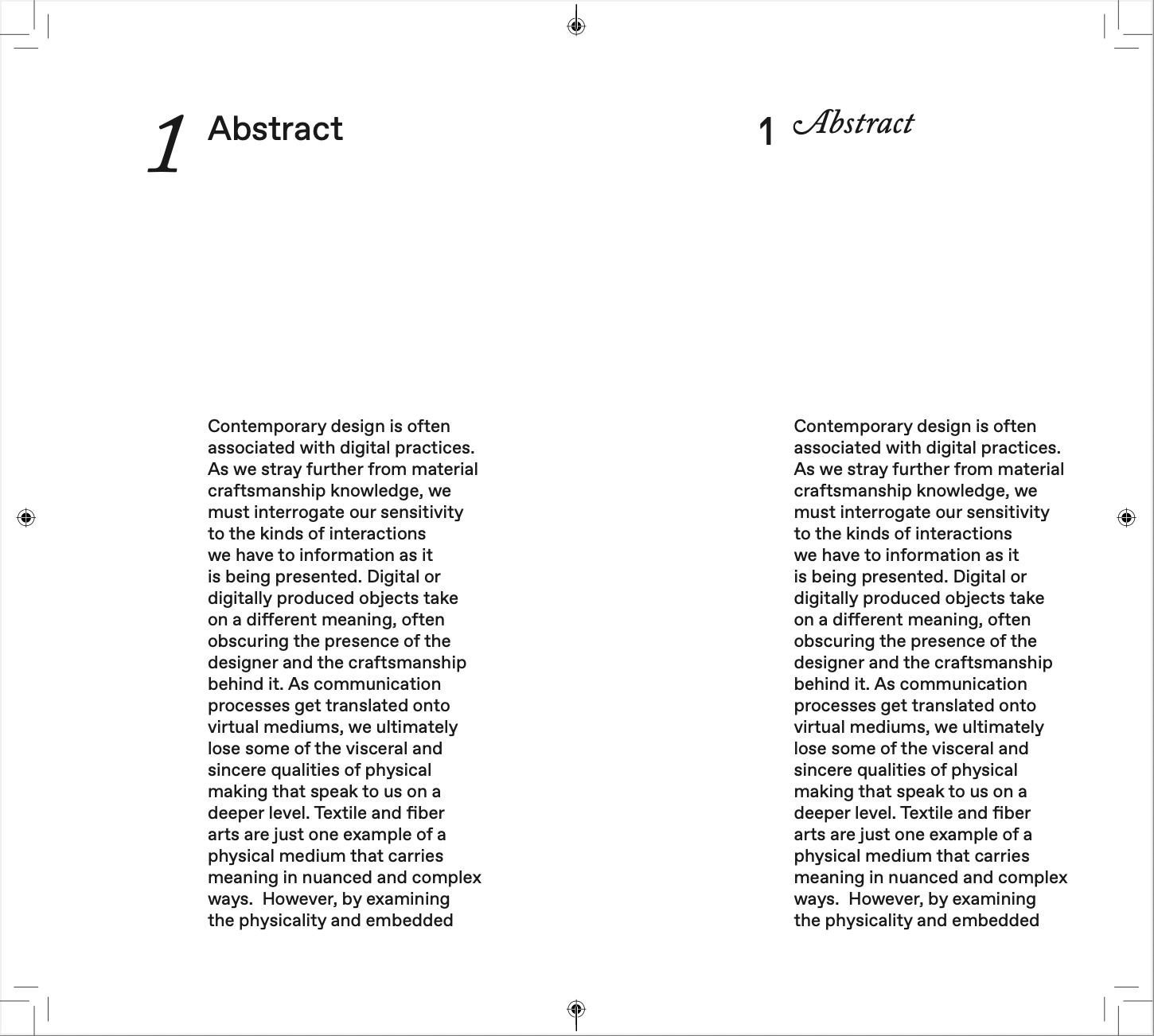
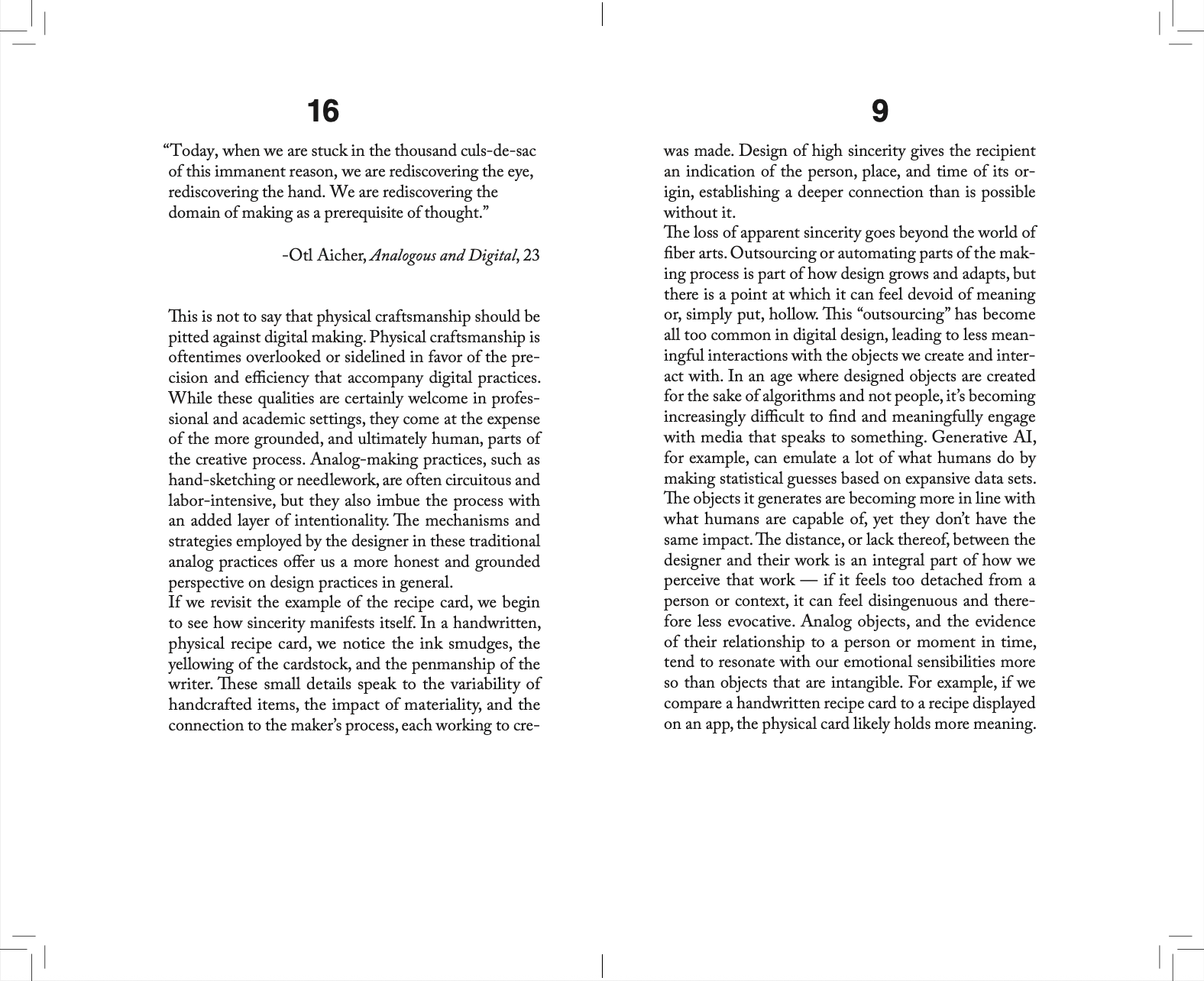
When deciding on the typography, I wanted a more traditional style for the bulk of the text. Since the size of the book was not very large, I knew I wanted to print excerpts of my writing in various sizes to see which would work best. After comparing several serif fonts, I decided on Adobe Caslon. This became the basis for my design system, which would encompass headings, subheadings, body copy, page numeration, image captions, and more. I was able to have fun with the page numbers in terms of both typeface and scale, calling back to some of the experiments I display in the book.
After inserting all of the content, including images and scans, I finalized the typesetting for the book and sorted the pagination sequence so that I could begin production.
Production
For the production of this book, the process began long before I began designing my file. I began researching and sourcing materials very early on in the design process. I ordered paper samples, experimented with printing on unconventional fibrous materials, looked into bookbinding techniques, changed the number of pages per signature to get the book to lie flat, etc.
One of my favorite parts about the production of this book was the iterative nature of it. I learned that the best way to see how something works is by doing it. I would say I have more than 10 versions of this book, and they are each a little different. However, for the final one, I know that each decision that went into it — whether it was the shade of red thread or the decision to leave the spine exposed — was meticulously thought out and tested.